

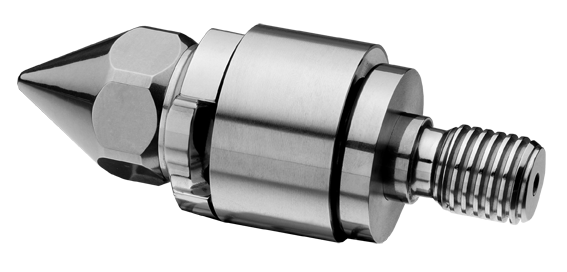
If you’ve been in the plastics industry for more than a week, you know the drill. We spend hours obsessing over melt temperatures, clamping pressures, and cooling times. But often, the component that actually dictates the consistency of your part is the one you can’t even see while the machine is running: the non-return valve.
Think of the valve as the “heart” of the injection unit. When it works, you don’t notice it. When it fails, your scrap rate hits the ceiling.
The Anatomy of the Shot
In a standard reciprocating screw setup, the valve sits at the tip of the screw. Its job sounds simple: allow plastic to flow forward during plasticizing (refill) and prevent it from leaking backward during the high-pressure injection stroke.
However, as any shop manager will tell you, “simple” is rarely easy. There are three main players in the valve world, and picking the wrong one is a recipe for flash, short shots, or degraded material.
1. The Three-Piece Ring Valve (The Workhorse)
This is the industry standard. It consists of a retainer, a check ring, and a seat.
- Pros: Great for general-purpose resins; easy to maintain.
- Cons: Can be slow to shut off with low-viscosity materials, leading to “cushion bounce.”
2. The Ball Check Valve (The Precision Specialist)
Instead of a ring, a spherical ball seals the flow.
- Pros: Incredible shut-off fastness. If you are molding tiny, high-precision medical parts, this is often the go-to.
- Cons: Higher pressure drop and harder to clean during color changes.
3. The Poppet Valve (The High-Flow King)
Designed for high-speed applications where you need to move a lot of material fast without shearing it to death.
- Pros: Excellent flow characteristics and very low wear.
- Cons: Typically more expensive and requires precise calibration.
Signs Your Valve is Giving Up the Ghost
How do you know it’s time to pull the screw and inspect the tip? Look for these “red flag” symptoms:
- Inconsistent Cushion: If your cushion position is wandering more than a few millimeters, your valve isn’t sealing consistently.
- Black Specks: Material can get trapped in “dead zones” behind a worn ring, degrade, and then flake off into your parts.
- Slower Fill Times: If the machine is working harder but the mold is filling slower, you’re likely losing pressure to backflow.
The Bottom Line
Don’t treat your valves like a commodity. A high-quality, carbide-reinforced valve might cost more upfront, but if it saves you two days of downtime and 5% in scrap over its lifespan, it has paid for itself ten times over.
Is your current valve setup struggling with a specific resin? I can help you compare the flow dynamics of a ring valve versus a ball check for your specific machine—would you like me to break down the pros and cons for a particular material like Nylon or Polycarbonate?